Virtual meetings: what’s next in unified communications?
.jpg)
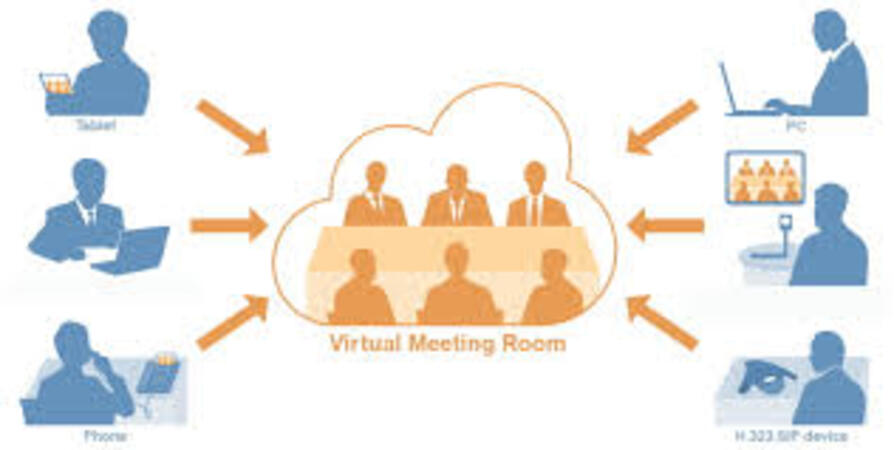
In recent years, there have been promising evolutions in meeting room technology. From the hardware appliances that were created solely to deliver a high-quality video conferencing experience, the workplace has switched to software solutions that are hosted on-premises – like Microsoft Skype for Business – and in the cloud – like Microsoft Teams. But this is just the beginning – other technologies are ready for deployment and will once again transform the meeting room experience.
One of these is the integration of intelligent cameras within sound bars, which can collect data on the meeting room, such as how often is it used and by how many people. When a company expands or relocates, this data can help it decide on what type and size of meeting room it will need. In addition, virtual meeting tools such as the Crestron Flex-line are extremely flexible, enabling firms to switch between tools easily. You can use Skype for Business today but switch to Microsoft Teams tomorrow, simply by opening a different application rather than replacing the meeting room technology.
New systems are also simplifying the conference call experience. For example, when you book a room and schedule a virtual meeting, the system will recognise you when you enter the meeting room and automatically dial in. All you have to do is sit down and commence the conversation.
However, the tools are also evolving to become self-healing meeting room technologies. Today we have deployment and management platforms based on the internet of things which make it easier to install, configure and update meeting room equipment, and allow for remote monitoring and problem solving. The IT department can control this now, but in the future, artificial intelligence will be able to identify problems and solve them.
Augmented reality will become a big part of the meeting room. While users currently look at 2D images of their colleagues on screen, in the future they will be able to see 3D visualisations which are integrated into the physical world with simultaneous language translation.

Latest Jobs
-
- Public Sector Cyber Security Sales | UK
- England
- N/A
-
Public Sector Cyber Security Sales | UK UK | Remote / Hybrid A cyber security provider is seeking a Public Sector Sales professional to drive growth across UK government and public sector organisations. Must have current Cyber Security sales experience. Responsibilities Generate new business selling cyber security solutions into UK public sector Build relationships with CIO, CISO and senior technology stakeholders Manage the full sales cycle from opportunity to contract close Develop pipeline across central government, local government and public sector bodies Support bids, tenders and framework opportunities Experience Proven cyber security sales experience in the UK Track record selling into public sector organisations Familiarity with CCS, G Cloud or other government frameworks Strong stakeholder engagement and deal management skills Location UK based Security Requirements Eligible to obtain UK Security Clearance
-
- Security Architect | MoD - Security Cleared. OUTSIDE IR35 | Hampshire
- N/A
- Outside IR35
-
Security Architect | MOD | Security Cleared | Outside IR35 | Hampshire Commutable The successful candidate must be willing to undergo DV Clearance, ideally already holding active clearance. You will produce high and low level security architecture documentation, guiding and validating designs for systems deployed within sensitive environments. The role requires providing specialist security input into solution design, service transition and change initiatives, working closely with engineering, operations, client and third party stakeholders. You must have current hands on architectural experience, including VMware secure platform design and virtualisation architecture, alongside AWS expertise. This is an outside IR35 contract- 6 month rolling. Part of a longer term MoD project